Reframing Restaurant Search
to Help Users Make Better Decisions
As the UX Designer, I led the redesign of Naver’s restaurant search results to fix mismatched user intent and information clarity. I owned the full process—from user research and problem definition to interaction design, prototyping, testing, and final delivery.
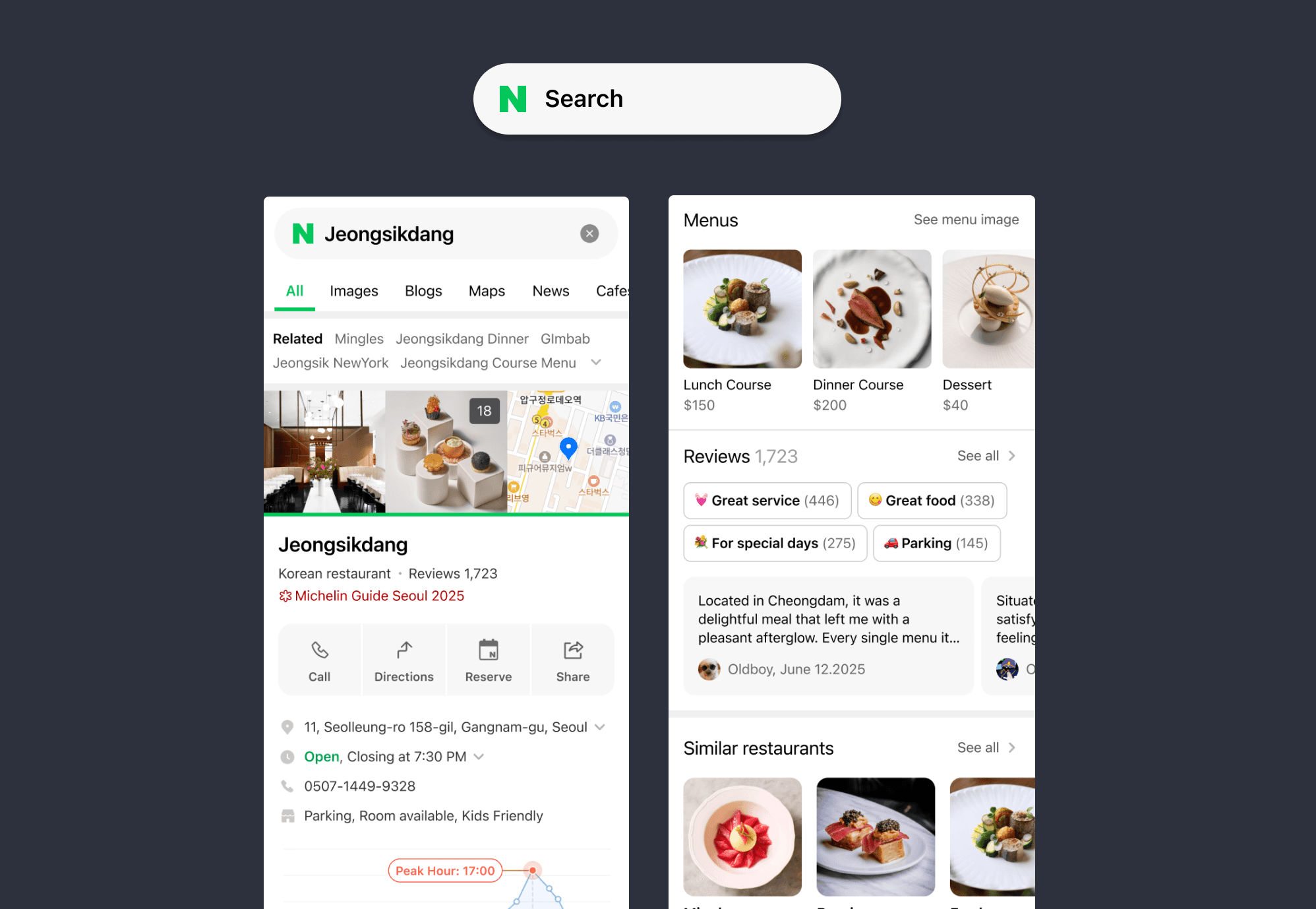
Product
Naver Search
Naver Search
Platform
Mobile Web
Role
UX Designer
Timeline
8 Month
Naver Search
Mobile Web
UX Designer
8 Month
Project Summary
Project Summary
Problems
The search results did not reflect users’ intent, making it difficult to find key information and reducing overall search efficiency.
Goals
Redesign the information structure to deliver intent-aligned results and help users find what they need more quickly.
Result & Impact
Search efficiency improved by 56%, and user testing showed clear gains in information clarity and overall preference.
Background : What do users search for on mobile?
Background : What do users search for on mobile?
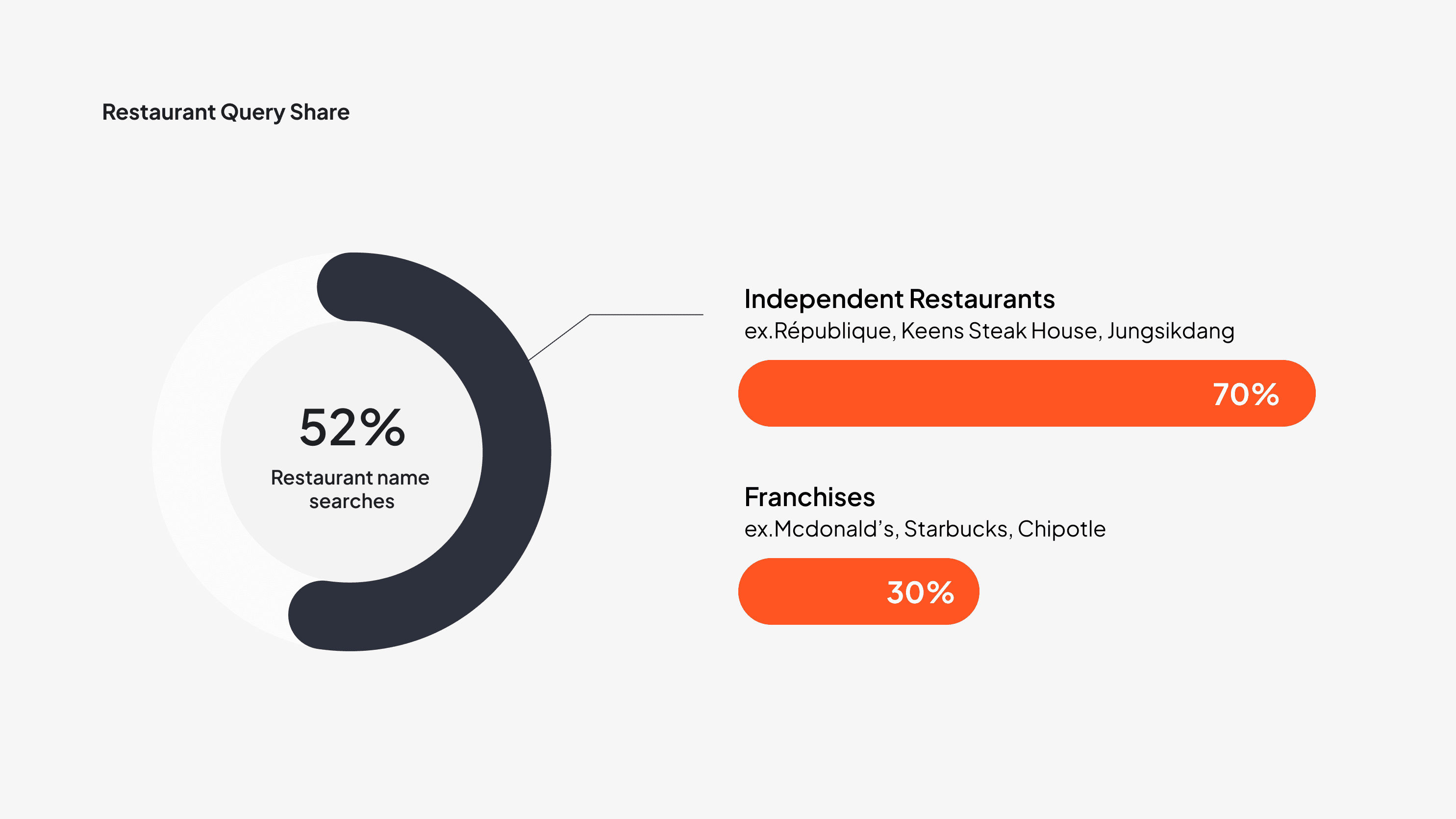
52% of users search for restaurants by name, while 48% look for location-based recommendations such as “popular restaurants in NYC.” Among name-based searches, 70% are for independent restaurants and 30% for franchises, revealing a clear difference in the types of restaurants users are interested in.
52% of users search for restaurants by name, while 48% look for location-based recommendations such as “popular restaurants in NYC.” Among name-based searches, 70% are for independent restaurants and 30% for franchises, revealing a clear difference in the types of restaurants users are interested in.
Problems : Different search needs, but nearly identical search results
Problems : Different search needs, but nearly identical search results
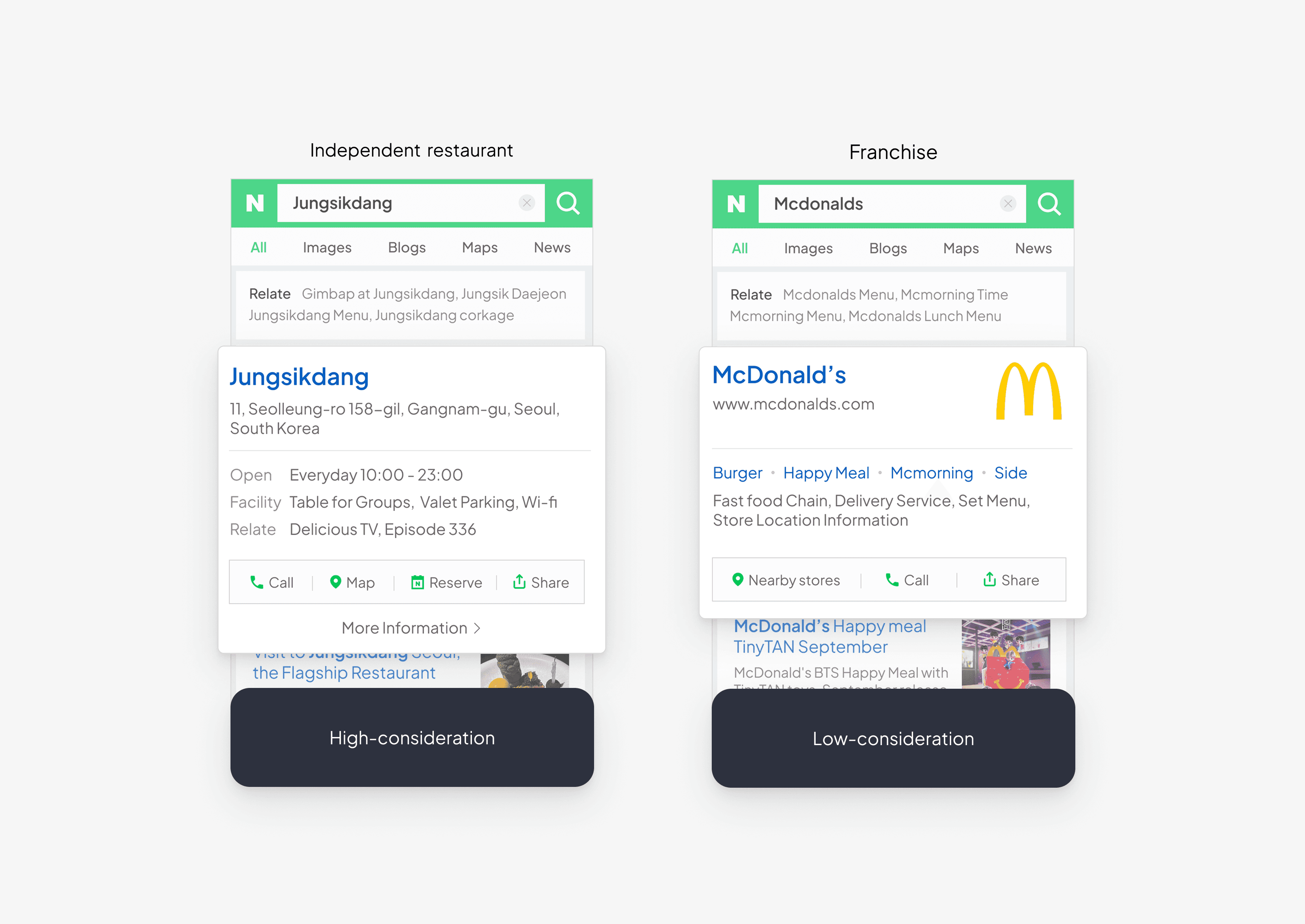
Data showed high search volume for both independent and franchise restaurants, but the way users search for them differs significantly. Independent restaurant searches require more information and comparison, while franchise searches are quick lookups centered on location and availability. However, both types were presented with nearly identical results, creating a mismatch that reduced relevance and clarity.
Data showed high search volume for both independent and franchise restaurants, but the way users search for them differs significantly. Independent restaurant searches require more information and comparison, while franchise searches are quick lookups centered on location and availability. However, both types were presented with nearly identical results, creating a mismatch that reduced relevance and clarity.
🍽️
High-Consideration : Independent Restaurant
User Insight #1 : Missing Basic Info Forces Users to Re-search
User Insight #1 : Missing Basic Info Forces Users to Re-search
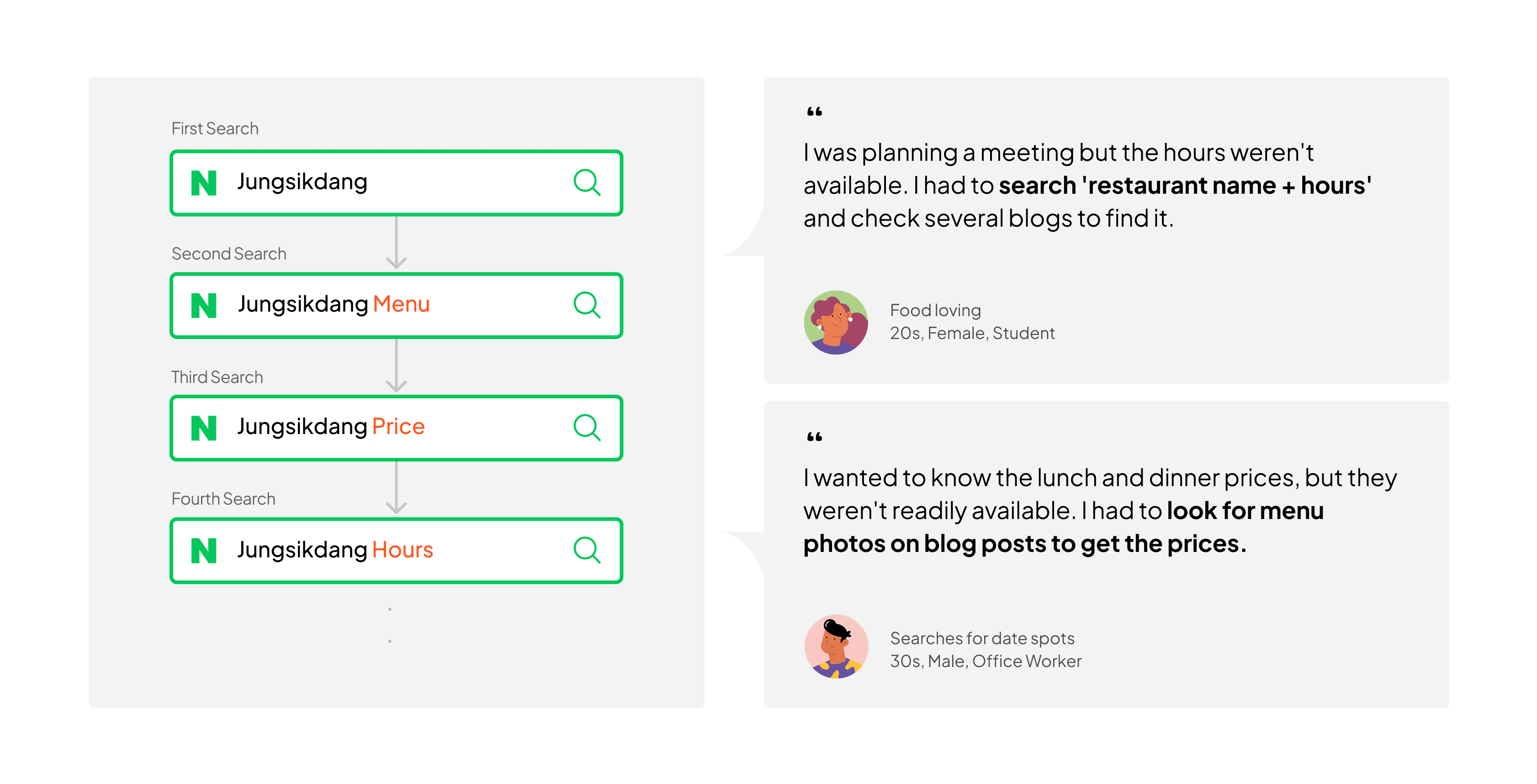
User research revealed that people repeatedly refined their queries because essential information—such as hours, menu, and pricing—was not provided in the initial result. These repeated searches not only highlighted missing content, but also exposed users’ natural information priorities when evaluating independent restaurants.
User research revealed that people repeatedly refined their queries because essential information—such as hours, menu, and pricing—was not provided in the initial result. These repeated searches not only highlighted missing content, but also exposed users’ natural information priorities when evaluating independent restaurants.
User insight #2 : Independent Restaurant Searches Require High-value Information Up Front
User insight #2 : Independent Restaurant Searches Require High-value Information Up Front
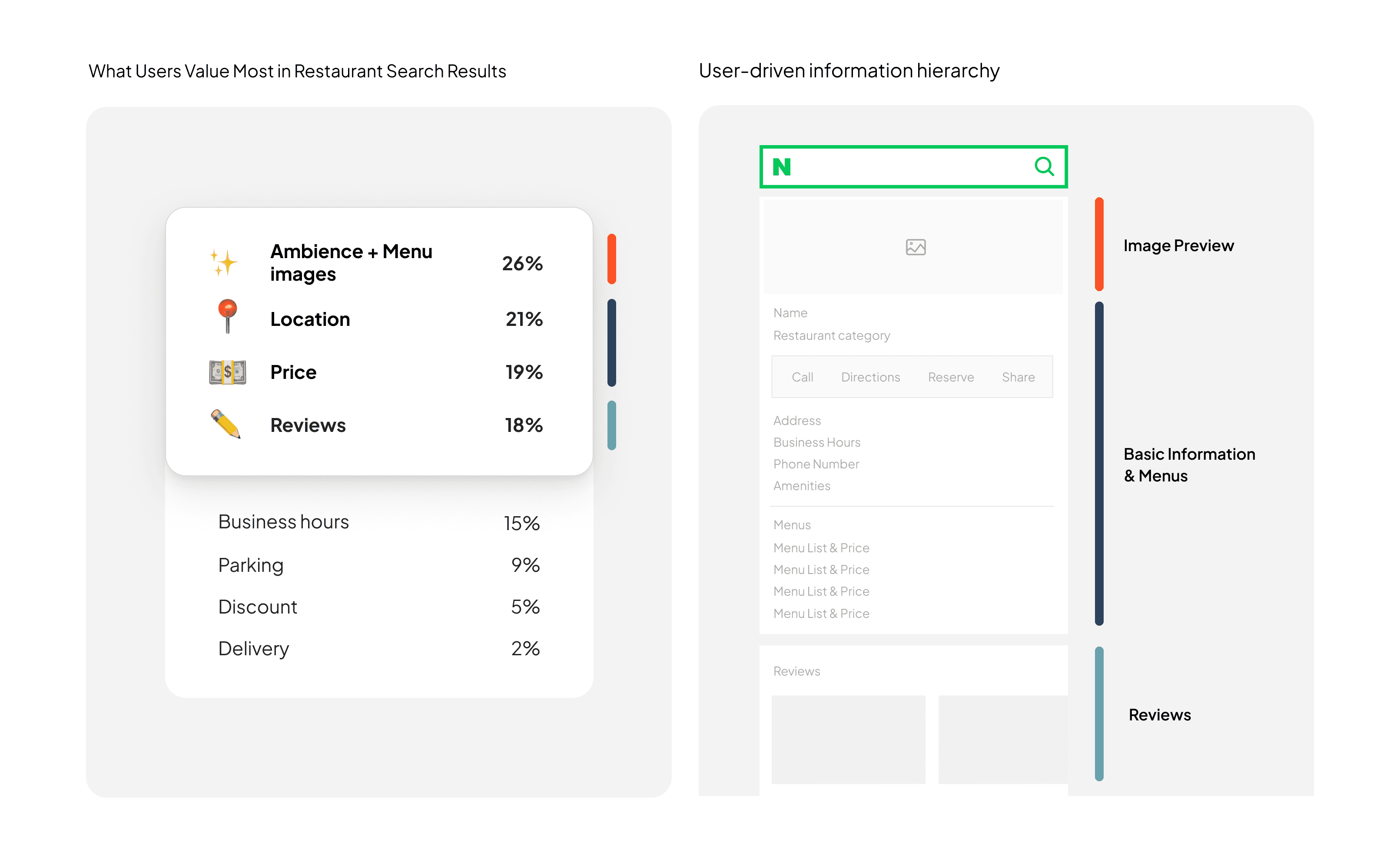
When searching for independent restaurants, users wanted to quickly scan menu images, ambience, and location through an image preview, then check basic details such as hours and pricing. These insights directly shaped the information hierarchy of the redesigned results page.
When searching for independent restaurants, users wanted to quickly scan menu images, ambience, and location through an image preview, then check basic details such as hours and pricing. These insights directly shaped the information hierarchy of the redesigned results page.
Design Explorations
Design Explorations
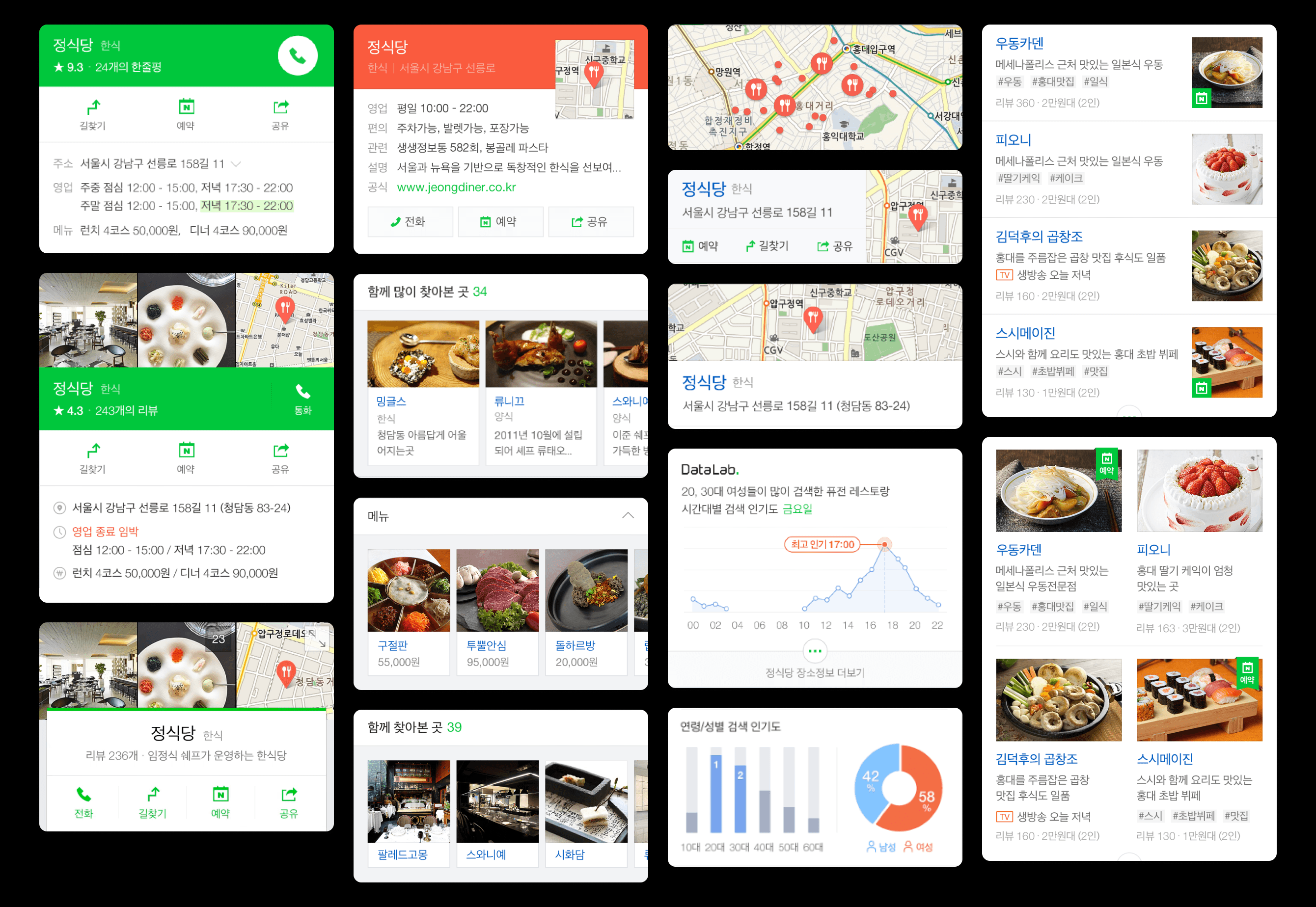
I explored multiple visual styles based on the initial wireframes to validate the best design direction, evaluating how clearly information was delivered, whether the content appeared in the right order, and how effectively the visual emphasis guided user attention.
I explored multiple visual styles based on the initial wireframes to validate the best design direction, evaluating how clearly information was delivered, whether the content appeared in the right order, and how effectively the visual emphasis guided user attention.
Preference Test : Comparing Design Options A & B
Preference Test : Comparing Design Options A & B
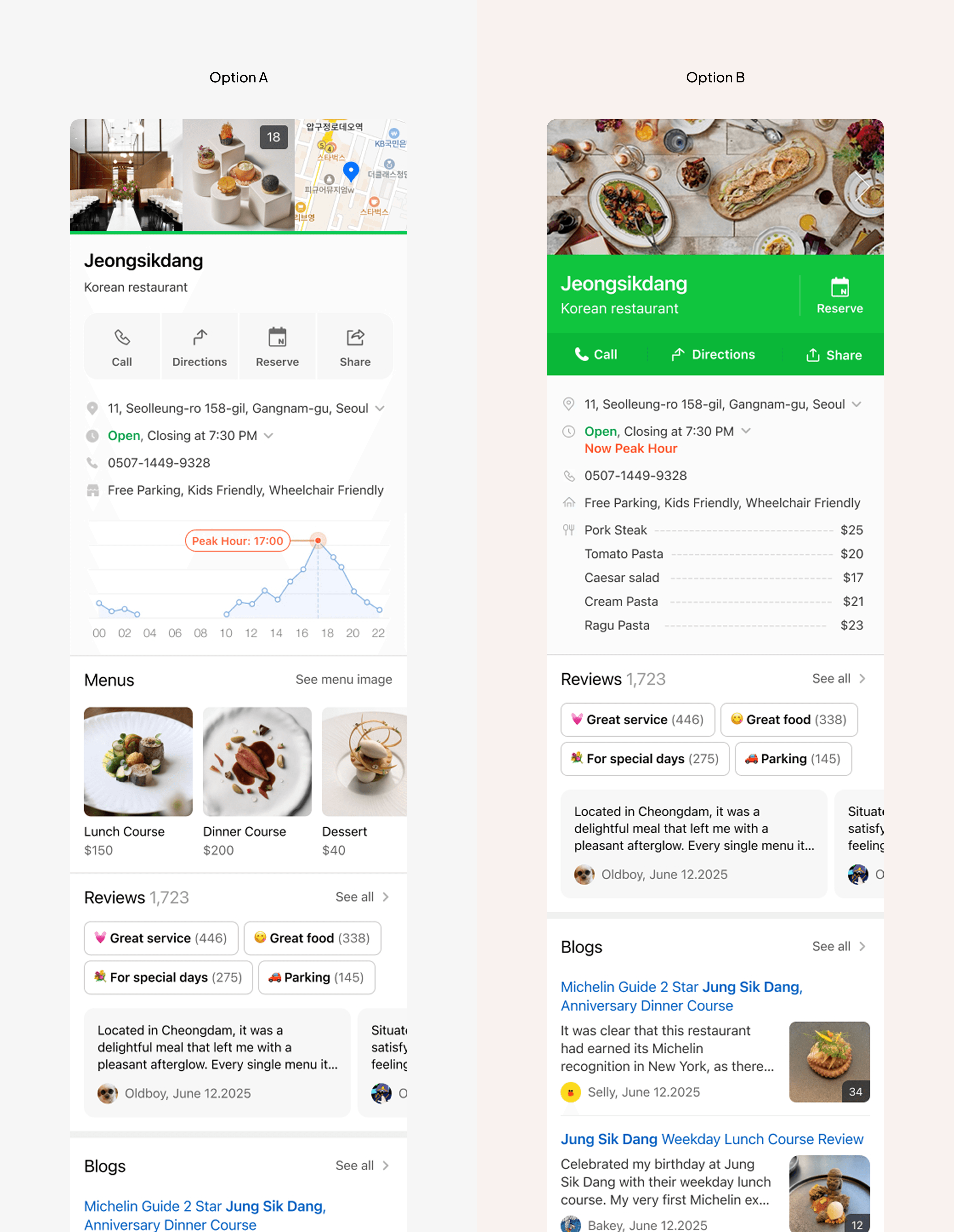
After testing two finalists with 12 participants, Option A outperformed Option B in usability, clarity, and accessibility, while Option B was mainly preferred for its visual appeal. Option A was ultimately selected because it offered a stronger hierarchy and a more practical experience for daily use.
After testing two finalists with 12 participants, Option A outperformed Option B in usability, clarity, and accessibility, while Option B was mainly preferred for its visual appeal. Option A was ultimately selected because it offered a stronger hierarchy and a more practical experience for daily use.
Final Design: Independent Restaurant Search
Final Design: Independent Restaurant Search
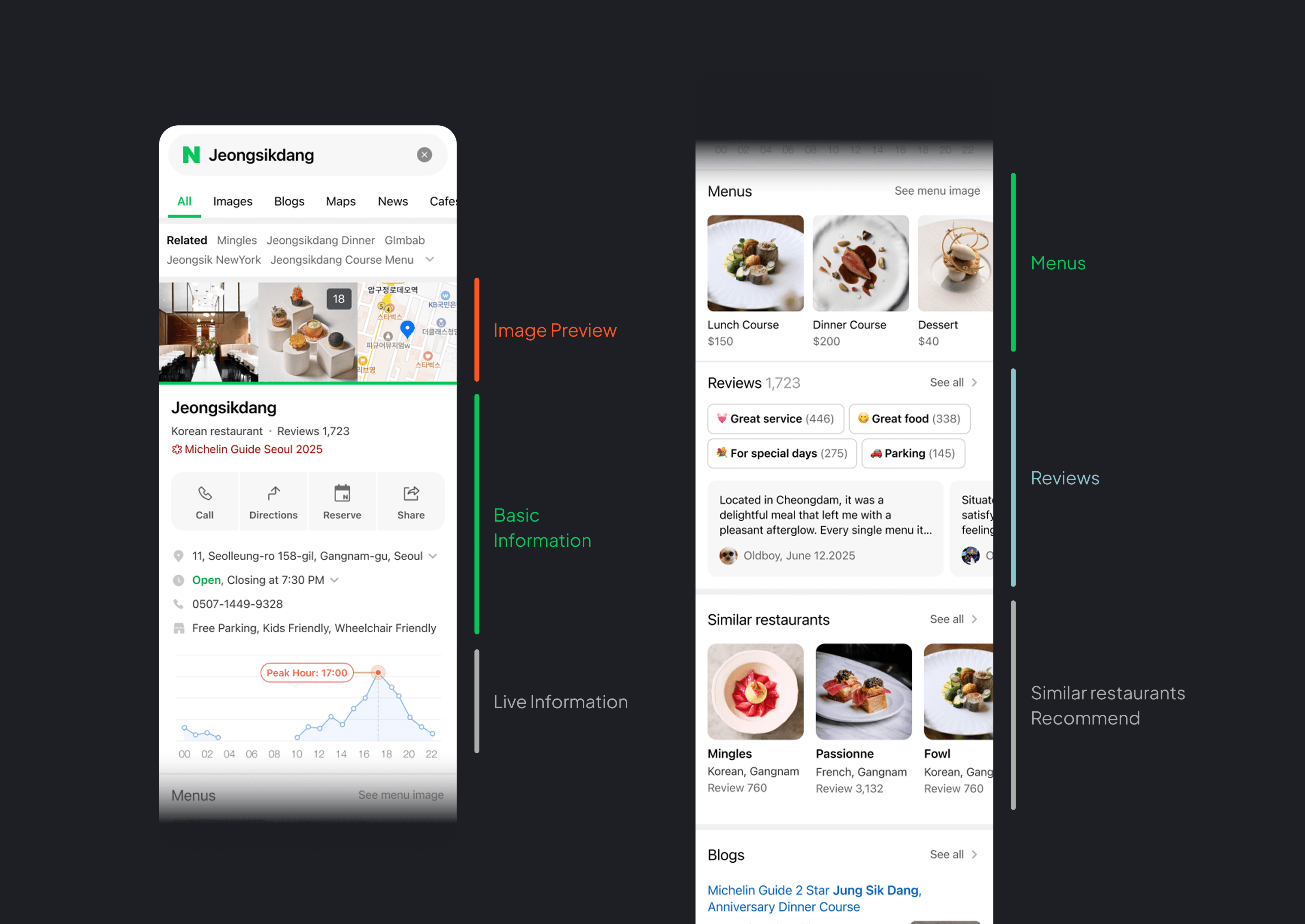
The redesigned search results bring all essential information together in one place, eliminating repeated searches or page hopping. By surfacing key details upfront such as hours, menu images, pricing, and reviews the new design helps users make decisions faster and with greater confidence.
The redesigned search results bring all essential information together in one place, eliminating repeated searches or page hopping. By surfacing key details upfront such as hours, menu images, pricing, and reviews the new design helps users make decisions faster and with greater confidence.
🛵
Low-Consideration : Franchise Restaurant
User Insight : Users prioritize nearby locations when searching franchises.
User Insight : Users prioritize nearby locations when searching franchises.
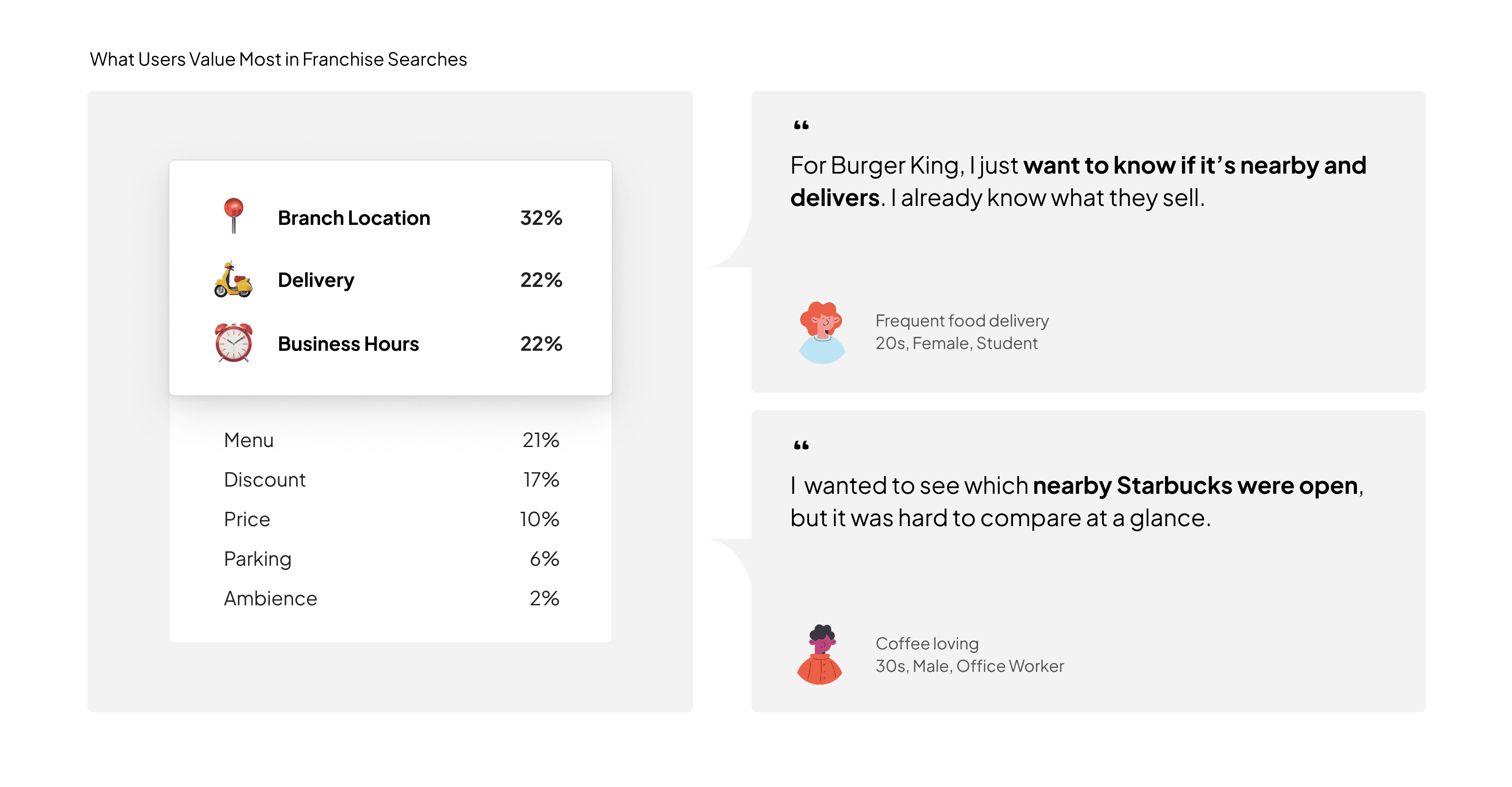
Franchise users care less about detailed restaurant information and more about quickly comparing nearby branches. They wanted a way to check which locations were close, open, or offering delivery at a glance ideally through a combined map and list view.
Franchise users care less about detailed restaurant information and more about quickly comparing nearby branches. They wanted a way to check which locations were close, open, or offering delivery at a glance ideally through a combined map and list view.
Final Design
Final Design
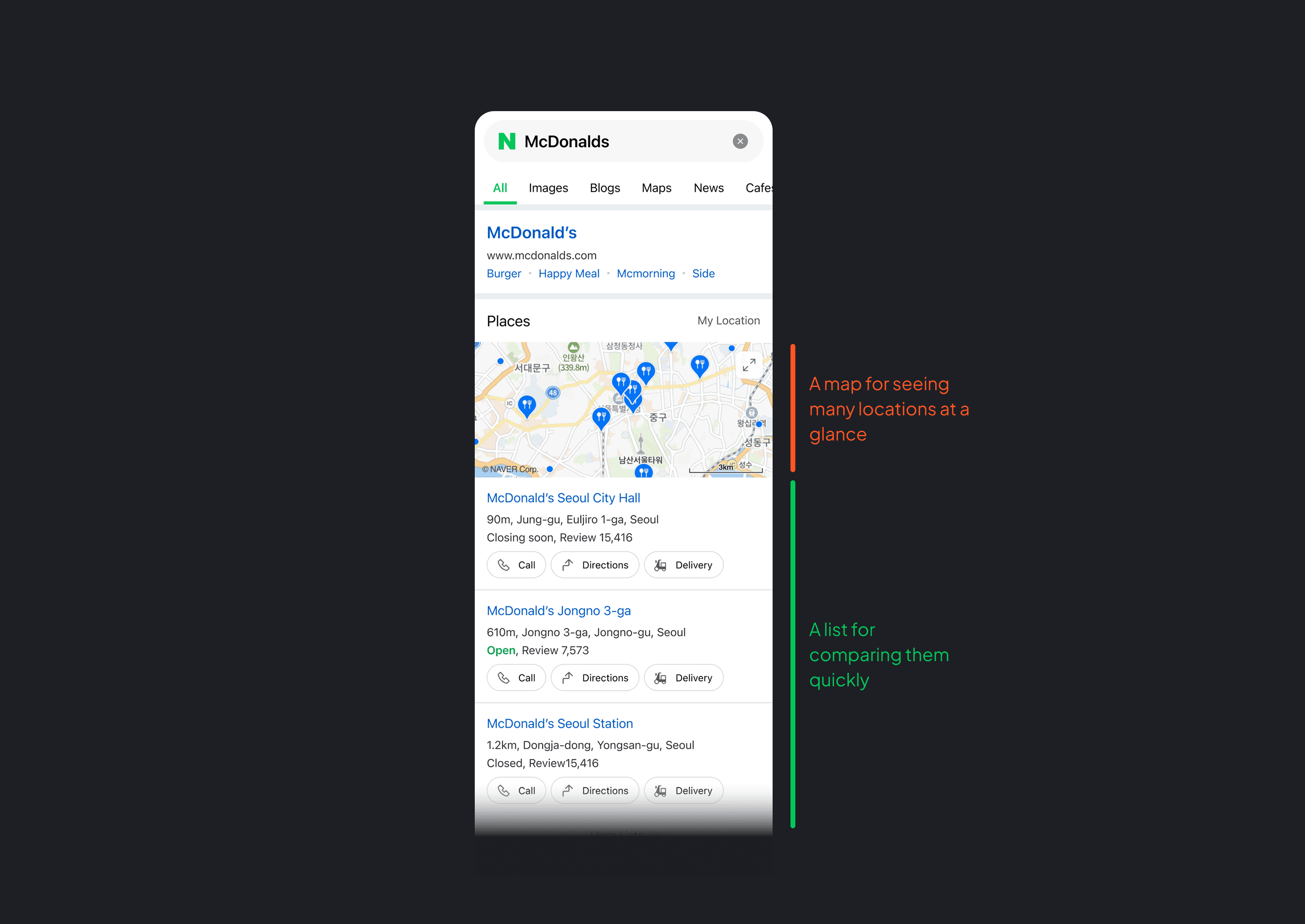
Franchise search is designed to help users quickly compare multiple nearby locations.
By displaying a map alongside a list, users can easily check proximity, availability, and store options at a glance.
Franchise search is designed to help users quickly compare multiple nearby locations.
By displaying a map alongside a list, users can easily check proximity, availability, and store options at a glance.
Result
Result
01
01
56% improvement in search efficiency (3.2 → 1.4)
56% improvement in search efficiency (3.2 → 1.4)
02
02
24% increase in action button clicks (Calls / Reservations)
24% increase in action button clicks (Calls / Reservations)
03
03
Users found key restaurant information in one search instead of three
Users found key restaurant information in one search instead of three
04
04
Better exposure for restaurants + higher user task completion
Better exposure for restaurants + higher user task completion
3.2 →1.4
3.2 →1.4
Average numer of
Queries per sesson
Click per title
56%+
3.2→1.4
56%+
Search
Effeciency
Average numer of
Queries per sesson
Search
Effeciency
56%+
Search
Effeciency
24%+
24%+
24%+
Action Button
Click
Action Button
Click
Action Button
Click